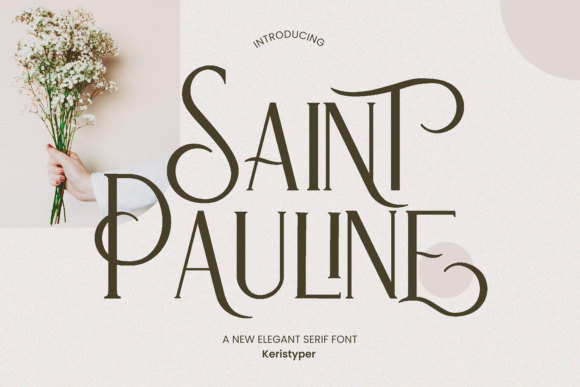
Discover the Elegance of Saint Pauline: A Modern Serif Font with Vintage Charm
In the world of design, typography plays a crucial role in conveying tone, style, and personality. One font that has gained attention for its unique blend of modernity and vintage appeal is Saint Pauline. This minimalist serif font offers an elegant aesthetic that draws inspiration from the Art Deco era, making it a versatile choice for a variety of creative projects.
Whether you're working on a logo, packaging, or invitation card, Saint Pauline provides a refined look that stands out without being overly complex. Its clean lines and balanced structure make it easy to read while maintaining a sense of sophistication. For designers looking to add a touch of timeless elegance to their work, Saint Pauline is an excellent option.
Understanding the Challenges of Typography in Design
Choosing the right font can be a challenge, especially when balancing aesthetics with functionality. Many designers struggle with finding a typeface that is both visually appealing and practical for different applications. Some fonts may look great in large headings but become difficult to read in smaller sizes, while others might lack the character needed to make a lasting impression.
This is where Saint Pauline shines. It’s designed with both form and function in mind, ensuring that it works well across various mediums. The font includes special uppercase letters, alternate characters, and beautiful ligatures that add depth and uniqueness to any design. These features allow for greater flexibility, enabling users to tailor the font to their specific needs.
How Saint Pauline Can Help Achieve Your Design Goals
If you're aiming for a vintage-inspired look without sacrificing modern clarity, Saint Pauline offers the perfect solution. Its Art Deco influence gives it a distinctive character that can elevate the visual appeal of your project. Whether you're creating a luxury brand identity or designing a wedding invitation, this font can help you achieve a polished and cohesive aesthetic.
One of the key benefits of Saint Pauline is its versatility. It can be used in both digital and print formats, making it suitable for a wide range of applications. For instance, it works well for headlines in marketing materials, as well as for body text in brochures or packaging designs. The font's readability ensures that it remains effective even in smaller sizes, which is essential for maintaining legibility in various contexts.
Practical Applications of Saint Pauline
The applications of Saint Pauline are vast, making it a valuable asset for designers, businesses, and creatives alike. In the realm of branding, this font can help establish a strong visual identity that resonates with target audiences. Its elegant appearance is particularly well-suited for industries such as fashion, hospitality, and lifestyle brands that aim to convey sophistication and refinement.
For packaging design, Saint Pauline adds a touch of class that can differentiate a product on the shelf. It pairs well with other design elements, allowing for a harmonious and professional look. Similarly, in the context of invitations, whether for weddings, events, or formal gatherings, the font brings a sense of timelessness and grace that enhances the overall experience.
Recommendations and Considerations for Using Saint Pauline
When incorporating Saint Pauline into your design, consider the context and audience. While it excels in more formal or luxurious settings, it may not be the best choice for casual or informal projects. Understanding the tone and message you want to convey will help you determine if this font aligns with your goals.
Additionally, experimenting with different weights and styles of Saint Pauline can yield varied results. Some users may prefer the classic look of the standard version, while others might opt for the alternate characters to add a unique flair. Testing the font in various scenarios will help you find the most effective way to use it.
Tailoring Saint Pauline to Your Unique Needs
Every designer has different preferences and requirements, and Saint Pauline can be adapted to suit a range of creative approaches. Some users may focus on its decorative elements to create eye-catching headlines, while others may prioritize its readability for larger blocks of text. By understanding how to leverage the font's strengths, you can maximize its impact in your work.
Moreover, Saint Pauline can be paired with other fonts to create a balanced typographic hierarchy. For example, combining it with a sans-serif font for body text can provide contrast while maintaining a cohesive design. This approach allows for greater flexibility and ensures that the overall composition remains visually appealing.
In summary, Saint Pauline is more than just a font—it's a tool that can enhance your design work with its elegant and vintage aesthetic. By addressing the challenges of typography and offering practical solutions, it empowers designers to create visually striking and functional projects. Whether you're working on a logo, packaging, or invitation, Saint Pauline is a reliable choice that brings both beauty and purpose to your designs.